Home /
About Ramsgate /
News / Planting a tree in your front garden makes your street attractive for your community and helps pollinating insects thrive.
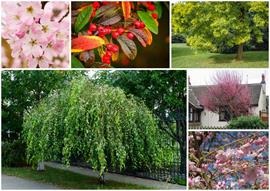
Talking to many older residents in Ramsgate, in their youth, they fondly remember avenues of trees on many roads in the town that have sadly disappeared. Practically it is often not possible to plant street trees now with the narrow width of the pavements and cars/vans parking on the kerbs. Also, the cost of planting on pavements is expensive and requires what is known as a blue/green system that helps avoid utilities as the tree roots develop.
So how can we enhance our streets with trees to improve the aesthetics and biodiversity nowadays at a lower cost?
Planting small trees or trees with open canopies that retain a high degree of light is perfect for front gardens. Impact is relatively minor to space, but substantially improves the surroundings. It is unlikely to affect parking on drives and it also makes a positive contribution to our community.
Great examples of trees that meet these criteria are-:
Prunus subhirtella ‘Autumnalis Rosea’ - late autumn/winter flowering on bare stems with beautiful delicate pink single flowers.
Prunus ‘Kursar’ or Prunus ‘Okame’ - two examples of spring flowering cherries.
Prunus ‘Pandora’ flowers in early spring, flooded with unusual white flowers with pretty shell-pink patterns on them. The single flowers open from deep pink buds and are very popular with bees. Young bronzed red foliage follows, developing to mid-green and then vibrant shades of deep reds and oranges in the Autumn.
Crataegus lavellii ‘Prunifolia’ - semi evergreen glossy foliage with white flowers in spring/early summer, followed by red berries.
Betula dalecarlica - fine toothed leaves, light green deciduous foliage, open canopies, attractive winter bark particularly as the tree matures.
Robinia pseudocacia ‘Frisias’ - a stunning upright, medium sized ornamental tree that will grow to approximately 8 x 4 metres in 20 years. It will grow in most positions where exposure to wind is avoided. Well drained, acidic soils are preferred, but chalky soils or dry conditions will also be tolerated very well.
Ligustrum lucidum is a small evergreen tree with broadly oval, glossy leaves growing to 15cm in length, and small, creamy-white flowers in panicles growing to 15cm in length in summer and early autumn. Fruit a small black berry, seldom formed. A variegated leaf form worth considering is Ligustrum lucidum ‘Variegata’.
Winter is a perfect time to plant deciduous bare rooted trees until the end of February and are cheaper being purchased in this form. Containerised stock can be planted all year round. Please make sure the roots are kept moist before planting and then watered in, after planting. A short stake 1 metre out of the ground with hemp tape strapping is recommended in windy areas so the roots are kept anchored in order to allow the tree to develop its fibrous roots. Wingham country market has sweet chestnut posts that are perfect for this and that way you are supporting local good woodland management. Tree hemp tape to support the tree to the stake avoids plastic straps and is an eco-friendlier approach.
Why not talk to your neighbours about planting trees in one corner of your front gardens? This will beautify your road and bring joy to the community.